 |
| http://www.protrainings.com/why_us/flexible |
Tuesday, December 15, 2015
Stoichiometry Test
Surprisingly, I thought the Stoichiometry test was pretty easy. I prepared a lot more than usual last night, which I think helped me out on the test today, especially doing the exam tickler practice that was available to me. However, I thought the last test was pretty easy and I did not do so well, so I'm still nervous as I await the results of this test. Anyways, the semester is pretty much over. I feel that I did a pretty good job in this class over the semester, but there's always room for improvement. I've heard that second semester is a lot harder than first, so I'll have to put a lot more time and effort into this class next semester, but I think I will be able to do fine.

Monday, December 14, 2015
Iron Lab
The Iron Lab was a very interesting lab. First, we put a polished iron nail in a solution of water and Copper(II) Chloride in a baby food jar. Then, we let it sit overnight in order to let the entire reaction take place. The next day, we took out the nail and washed all of the copper off of it. Next, we drained the excess fluid from the jar of copper, then washed it with water. We repeated the draining process, then washed the copper again with HCl, and we drained it once again. then, we shook the jar a little bit in order to allow the solution to dry easier. We let the copper dry over the weekend, then took the mass of it today. The purpose of the experiment was to determine the theoretical and actual yield of Copper, and then to determine the percent yield of the Copper. This was a really cool lab!
Helpful Links:
 |
| https://en.wikipedia.org/wiki/Metallurgy_during_the_Copper_Age_in_Europe |
Sunday, December 13, 2015
Stoichiometry Weekly Quiz
The stoichiometry quiz was fairly easy in my opinion. It was mostly a lot of the basic information, so it wasn't very tricky. Although I got a 90% on the quiz, I'm not too worried about the test. I need to continue to do practice problems and remember all of the rules. Also, I need to work on the percent yield problems for the test because I missed the lecture over the percent yield portion of this chapter. I need to do well on this test, so I am going to have to work hard to get the grade that I desire!
Helpful Links:
 |
| http://www.samfunnetiaas.no/en/quiz/ |
Friday, December 11, 2015
Stoichiometry Intro
Unfortunately, there wasn't a pretest for this unit. I actually like taking pretests because they help me see what's going to be on the unit before it usually starts. The pre tests also have some of the same questions as the post test so it is beneficial to me. Anyways, the first stoichiometry lecture was pretty easy. Most of it consists of conversions. You have to convert the initial mass to moles, then compare that the the moles of the other substance, and finally change that to grams in order to solve the problem. Hopefully the rest of the unit is as easy as this part!
 |
| https://www.tes.com/lessons/Dd1iN2u2z62JUQ/stoichiometry |
Helpful Links:
Thursday, December 3, 2015
Chemical Reactions Test
The chemical reactions test was fairly easy for me. I spent a lot of time last night looking over my notes and doing practice problems, which really benefited me, as there were many similar questions on the practice and on the test. The test was over all types of reactions, driving forces, solubility rules, oxidation numbers, the reactivity series and a few other topics. For the most part, the questions were easy, but there were a few hard questions for me, as I had not seen questions like that before. However, I think I successfully worked my way through the harder questions, and I think that I achieved an A on this test.
Helpful Links:
 |
| http://science.pppst.com/chemicalreactions.html |
Wednesday, December 2, 2015
Chemical Reaction Metals Lab
In the Metals Lab, we combined different metals with aqueous solutions in order to see if the chemicals reacted. The main purpose of the lab was to demonstrate Redox reactions, as that is what we have been learning in class. Also, we created our own reactivity series based on the results of which elements reacted most often. In our experiment, Calcium was at the top of the reactivity series, for it reacted with every chemical that it was placed in, meaning that it had the highest probability of reacting with other elements. Lead, however, reacted with none of the chemicals it was placed in, so it was placed at the bottom of our reactivity series. This lab was fun to complete, for the reactions that we saw were interesting to see.
Helpful Links:
 |
| http://www.kgs.ku.edu/Hydro/GWtutor/Plume_Busters/remediate_refs/redox_chemistry.htm |
Tuesday, November 24, 2015
Weekly Quiz for Chemical Reactions Unit
The weekly quiz that we took yesterday was fairly easy. The material contained questions about driving forces, chemical equations, balancing equations, and solubility rules. The quiz was not very difficult, yet it was kinda confusing. It took me a minute to understand what I was being asked, so I had a difficult time processing the quiz at first. Also, there were a couple questions that I was unsure about, so I just had to guess on them. The quiz was only 11 questions, so missing a few will not have a huge effect on my grade.

Solubility Lab


Helpful Links:
List of Solubility Rules
Chemical Reactions Pre Test
Unfortunately, there was no Pre Test for the chemical reactions unit. Usually, the pre tests just make me feel really dumb anyways, so I'm kind of glad that there wasn't a pre test for this unit. Instead of the pre test, we went straight into notes, where we learned about different driving forces of reactions and the parts of writing chemical equations. Also, we learned how to balance normal chemical reactions as well as combustion reactions.
Helpful Links:
Balancing Equations Video
Driving Forces Video
Helpful Links:
Balancing Equations Video
Driving Forces Video
Friday, November 13, 2015
Formula of a Chloride Lab
Yesterday in class, we did the Formula of a Chloride Lab. To complete the lab, we put a small piece of Zinc in a beaker, then added Hydrochloric acid. Next, we put the beaker on a hot plate, and heated the chemicals. The Zinc dissolved into the Hydrochloric acid, then water began to be driven off. We heated the mixture until there was no liquid left, and there was a salt left in the beaker. Then, we cooled the beaker and took it's mass. The purpose of the lab was to determine the empirical formula formula for the salt at the end of the lab. In our results, we got a ratio of one Zinc to 2.068 Chlorine, which was a 3% error, as the real ratio is one Zinc to 2 chlorine atoms.
 |
| https://en.wikipedia.org/wiki/Zinc |
Helpful Link:
Wednesday, November 11, 2015
Formula of a Hydrate Lab
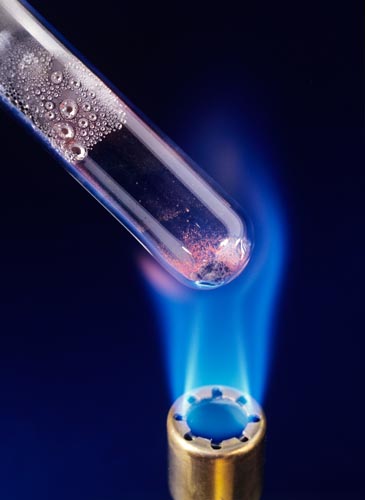
We ran the Formula of a Hydrate Lab on Monday this week, and it was very interesting and connected to our lesson perfectly. We started with Copper (II) Sulfate pentahydride (we didn't figure out that it was pentahydride until completing the lab), and we heated it using a bunsen burner. We heated the chemical in a test tube for about 5-7 minutes, then let the chemical cool before we took it's mass. We took the mass in order to figure out the mass of the water that was driven off, so we could try to find the number of water molecules in the substance. After weighing, we reheated the substance to drive off any additional water, and re-massed to chemical. Then, we calculated the number of water molecules in the substance, and determined that the answer was 5.
 |
| http://www.fphoto.com/?stockindexonline.com=1 |
Helpful Links:
Friday, November 6, 2015
Hydrates
Today in class, we learned about hydrates, which are chemical compounds that have water in them. If the hydrate loses its water molecules, then it becomes an anhydride. The nomenclature for hydrates is simple, for all you have to do is add a prefix for the number of water molecules to the root "-hydride" to the end of the anhydrous chemical. We also learned about using hydrates to solve equations. The equations took a lot of work, but the work was fairly simple and easy to complete. The process is very tedious, though, so a small mistake could lead to a disaster at the end.
Helpful Links:
Hydrates
Hydrate Equations
 |
| http://chemiru.com/products/ammonium-sulfate/ |
Helpful Links:
Hydrates
Hydrate Equations
Monday, November 2, 2015
Chemical Composition Pre Test
The Chemical Composition pre test was extremely hard. I'm not sure that I have ever seen anything on the entire test. The main things I noticed were there were a lot of numbers referring to the masses and percentages of atoms in particular compounds, but I still really had no idea what to do. As I got further and further into the test, I started just guessing, due to the fact that it was extremely hard, as well as it does not factor into my grade. Also, I am excited to learn this new material so that when the post test comes, I'll be able to actually understand what the questions are asking me to do.
 |
| http://sublimestudies.com/welcome/part4-implementation/screen-shot-2012-08-12-at-6-20-46-pm/ |
Helpful Links:
Thursday, October 29, 2015
Last Meal Conversion Project Reflection
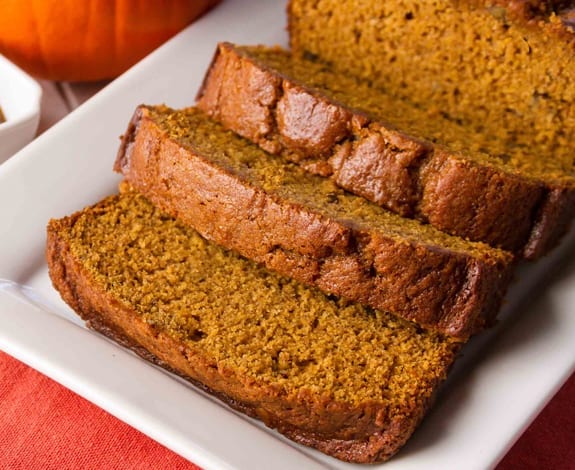
The Last Meal Conversion Project was a very fun project. It allowed me to practice my conversion skills while converting the ingredients to my favorite foods. The conversions were normally fairly easy to do, but it got tricky when you were converting the smaller sized items such as the spices. Also, it was difficult to determine whether some ingredients were solids or liquids. For example, I made pumpkin bread. It was hard to tell whether the pumpkin mixture was a solid or liquid, so I just made my best guess at it. Overall, the project was fun, and we also get to eat everyone's favorite recipes in class tomorrow, so I am excited for that.
Helpful Link:
 |
| http://www.onceuponachef.com/2009/09/spiced-pumpkin-bread.html |
Tuesday, October 27, 2015
Making a Mole
The mole project was an oddly easy project, for it did not take much effort to complete. We made moles to display in class for Mole day, the celebration of the number 6.022 x 10^23. This number is significant to chemistry because it is a unit that we use very commonly in the class.
There were many different approaches to the types of moles. My mole had the them of being Santa Claws Mole, but there were other themes that were much more creative. There was a Whack-a-Mole display, a metal mole, a Mole-zou mole, and many more that were very interesting. In addition, we had a party in class in which we brought in food, so the celebration of Mole day was a success.


Helpful Links:
How to Sew
Information about the Mole (unit)
There were many different approaches to the types of moles. My mole had the them of being Santa Claws Mole, but there were other themes that were much more creative. There was a Whack-a-Mole display, a metal mole, a Mole-zou mole, and many more that were very interesting. In addition, we had a party in class in which we brought in food, so the celebration of Mole day was a success.
Helpful Links:
How to Sew
Information about the Mole (unit)
Wednesday, October 21, 2015
Measurement Pretest
The Pretest for the measurement unit was pretty challenging. I did not know most of the information that was on it, for I have never seen most of it. I did not understand what a significant digit was, and I didn't know how to convert some of the measurements from miles to kilometers or vice versa. I believe that once I understand the concepts of the unit, it will not be very hard, but until then, I need to study and practice to ensure I understand all of the concepts.
Helpful Links:
Conversion of Units
Measurement Video
Helpful Links:
Conversion of Units
Measurement Video
Tuesday, October 6, 2015
Aspirin Lab
The past two days, we did the Aspirin Lab in class. We made Aspirin out of Salicylic Acid and acetic anhydride, using sulfuric acid as a catalyst. The process of making the Aspirin was really cool, and I learned a lot about the basic processes of Chemistry in the process. First, we combined all of the ingredients, and heated the mixture for 15 minutes in a hot water bath. Then, we let it cool, poured it in a beaker, and added ice cold water in order to form the crystals. In day two, we took the mixture, and ran it through a Buchner Funnel in order to extract only the crystals out. Once we had all of the crystals into the Buchner funnel, we pulled out the filter paper with the Aspirin on it, then placed it on the lab table to dry over fall break. I am very excited to see the results after break.
 |
| http://mumbai.all.biz/aspirin-powder-g551089 |
Helpful Resource showing the process:
Thursday, October 1, 2015
Final Thoughts on the Atomic Structure and Radioactivity Unit
Today, we took our Atomic Structure and Radioactivity test, marking the end of the unit. On the test, there were a wide variety of different questions, but I was expecting more questions on the different contributions by Dalton, Thomson and Rutherford on the Atomic model. The hardest part of the test for me were the half life questions that required me to do a lot of math. I had forgotten some of the formulas, but overall I think I did pretty well on this test.
 |
| http://staff.concord.org/~ddamelin/chemsite/c_AtomicTheory/dalton.html |
Also, the end of the unit means that our Star Log project is due. This project was much easier than the Frontier Chemistry Project, and took a lot less time to complete. I primarily used only three websites to gather all of my information, so the process was a lot of repetition of visiting the same sites over and over again. I learned a lot about different stars, and I also was intrigued by the different classes of stars and how their class related to their size and color.
Websites that helped me on my project:
Tuesday, September 29, 2015
Forensic Archaeology Lab
Today in class, we completed the forensic archaeology lab. In order to complete the lab, we had to cut out 567 squares, and simulate the process of half lives by dumping the squares out and removing the colored pieces of paper, representing decayed atoms. Then, the process was repeated 6 times in order to narrow the numbers down from 567 to about 12. The whole purpose of the lab was to correctly identify a fictional skeleton based on radioactive decay of the bones.
Next, we made a graph of our data in excel in order to show our results. The graph was very beneficial to me because it really helped me visualize the pattern of half lives and the severity of the drop off when half lives are accounted for.
Helpful links to reinforce knowledge of half lives:
HyperPhysics
Half Lives and Carbon Dating Video
Half Life basics
| http://marionlocal.k12.oh.us/hs/studentwebs/2009-2010/MM/winner/CPChanges/PhysicalChanges.html |
Next, we made a graph of our data in excel in order to show our results. The graph was very beneficial to me because it really helped me visualize the pattern of half lives and the severity of the drop off when half lives are accounted for.
Helpful links to reinforce knowledge of half lives:
HyperPhysics
Half Lives and Carbon Dating Video
Half Life basics
Thursday, September 24, 2015
Radioactive Decay
Today in class, we learned about the three basic forms of radioactive decay: alpha, beta and gamma. The main difference between each type of radiation is their effect of the mass number and atomic number of the element. In alpha radiation, the mass number is decreased by 4, and the atomic number is decreased by two; in beta radiation, the mass number is unaffected and the atomic number increases by one; in gamma radiation, neither the mass nor atomic number is affected due to the light energy that is given off in the gamma radiation. The basics of radiation are fairly easy for me to grasp, since there are only two big things that you have to remember for each type of radiation.
Tuesday, September 22, 2015
Beanium Lab
Today in class, we conducted the Beanium lab. The purpose of the lab was to determine the average atomic mass of a new element, Beanium. First, we divided up each of the isotopes of the Beanium into 4 groups; White, black, red and pinto. Then, we measured the mass of each isotope, then divided the total mass of each isotope by the number of atoms of the isotope present. Next, The average mass and percent abundance of each isotope was calculated, which gave us what we needed to find the average atomic mass of the Beanium. The average atomic mass that we calculated was .271g.
 |
| The total mass of the pinto isotope was 5.87g |
 |
| Our sample was sample D, contain 42 Beanium atoms |
Subscribe to:
Comments (Atom)